Cultural Heritage
The Art of Talavera
A tradition centuries in the making
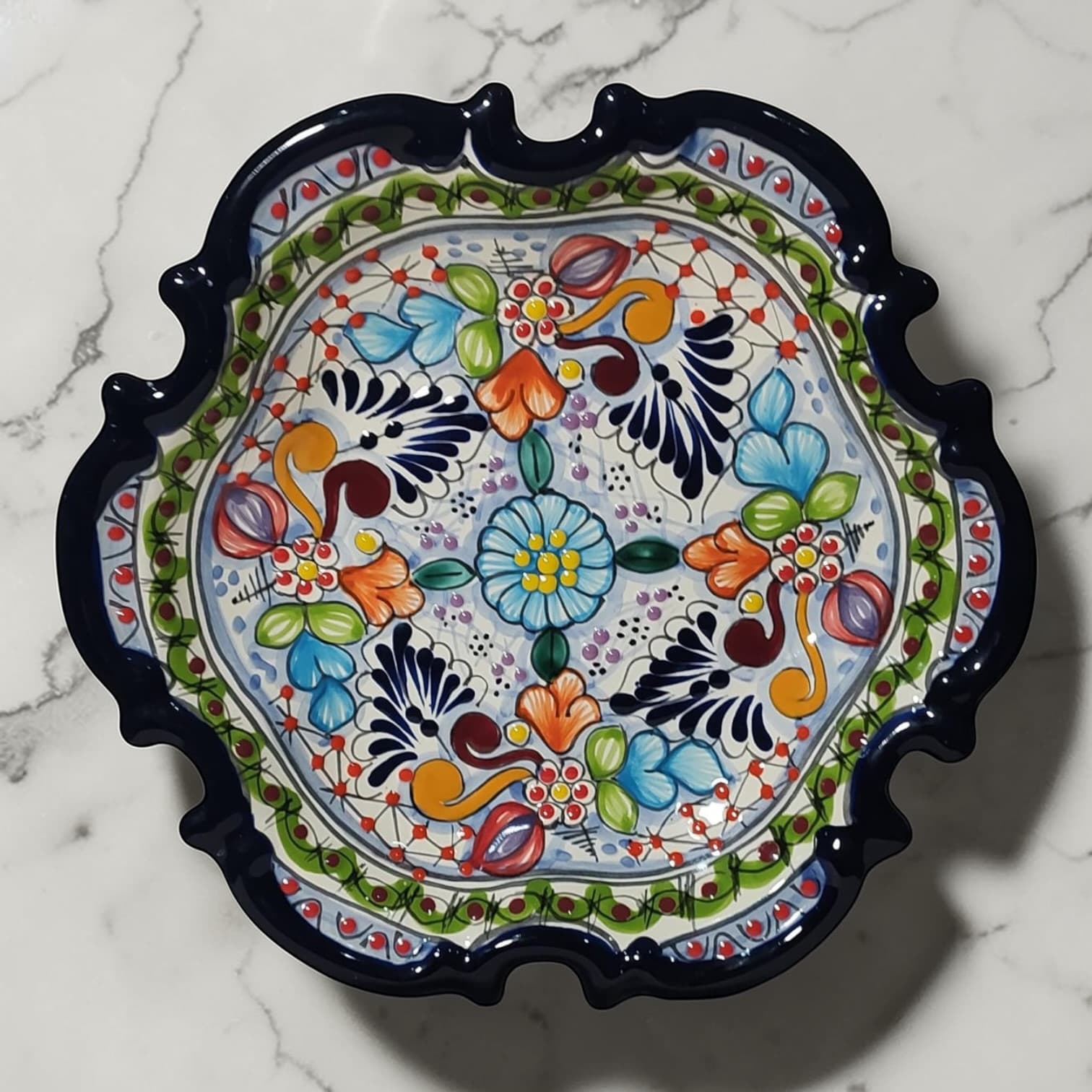
Talavera is one of Mexico's most celebrated ceramic traditions — a fusion of Spanish Majolica techniques and indigenous Mexican artistry that has flourished in Puebla for over four centuries. What began as a colonial craft has evolved into a symbol of Mexican cultural identity, recognized worldwide for its vibrant colors and intricate hand-painted designs.
A journey through time
16th Century
Origins in Spain
Majolica ceramic techniques develop in Talavera de la Reina, Spain, influenced by Moorish and Italian traditions.
1550s
Arrival in New Spain
Spanish monks and artisans bring the craft to colonial Mexico, establishing workshops in Puebla.
17th Century
Growth in Puebla
Puebla becomes the undisputed center of Talavera production, with distinctive Mexican motifs emerging.
18th Century
A Unique Identity
Mexican Talavera develops its own artistic language — bolder colors, indigenous influences, and baroque forms.
Today
Living Heritage
Talavera is recognized as part of Mexico's cultural patrimony, with Puebla artisans keeping the tradition alive.
The Heartland
Puebla — the soul of Talavera
Puebla is not just a city — it is the birthplace and guardian of Mexican Talavera. For centuries, its workshops have produced ceramics that blend European technique with the bold spirit of Mexico.
The city's unique clay, its master artisans, and its deep cultural roots make Puebla the only place where authentic Talavera is created. It is here that the Juárez family learned their craft, and it is from here that their art reaches the world.
What makes Talavera special
Hand-painted
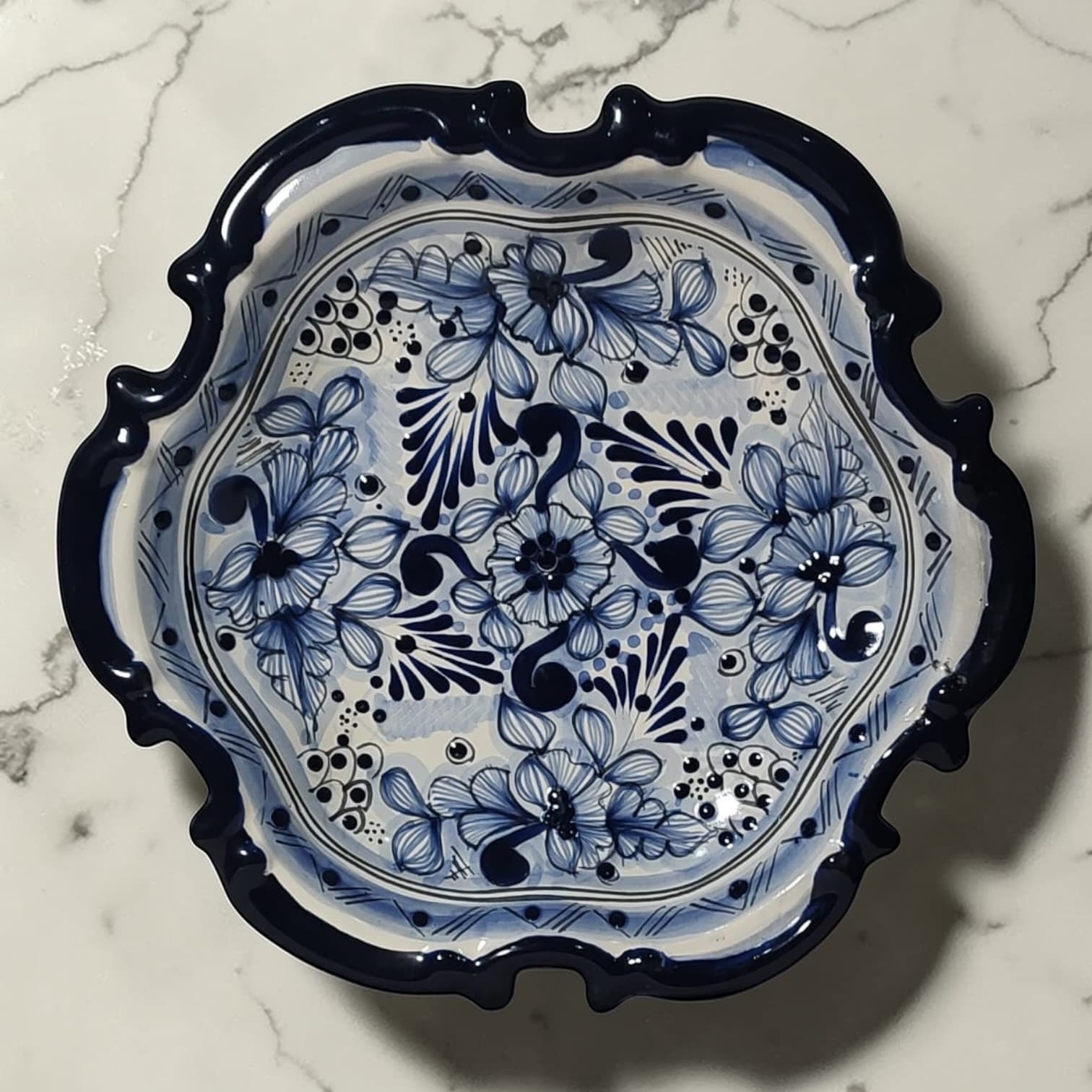
Every motif is painted freehand by skilled artisans — no stencils, no shortcuts.
Rich motifs
Floral arabesques, geometric patterns, and nature-inspired designs define each piece.
Iconic colors
Deep cobalt blue, terracotta, green, yellow, and black on a white tin-glazed base.
Dual purpose
Beautiful enough for display, durable enough for daily use.
Fired twice
Each piece undergoes two firings — once for the body, once for the glaze — at over 1,000°C.
One of a kind
No two pieces are ever identical. Each carries the unique hand of its creator.
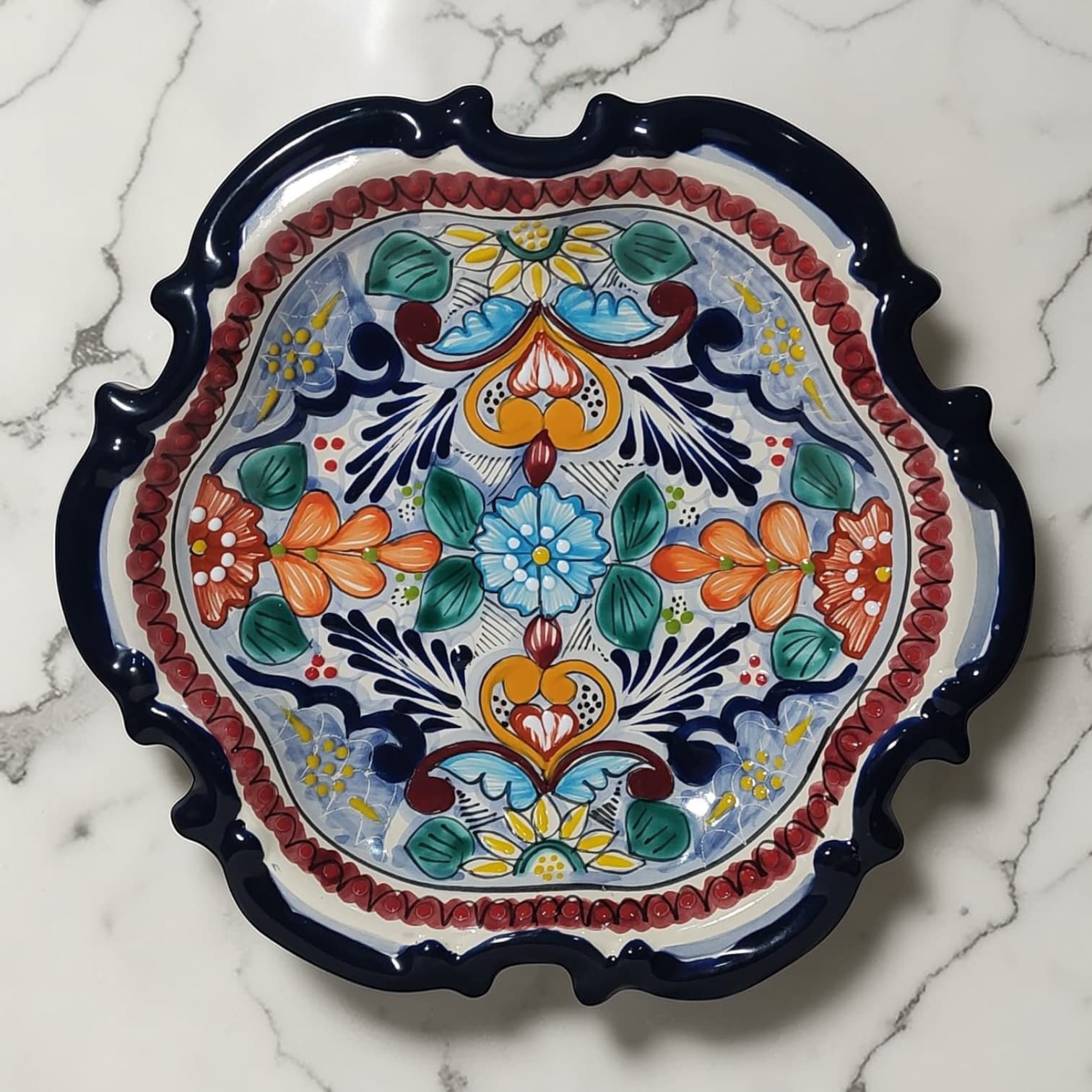
“More than ceramics, Talavera is a living expression of memory, place, and craftsmanship.”